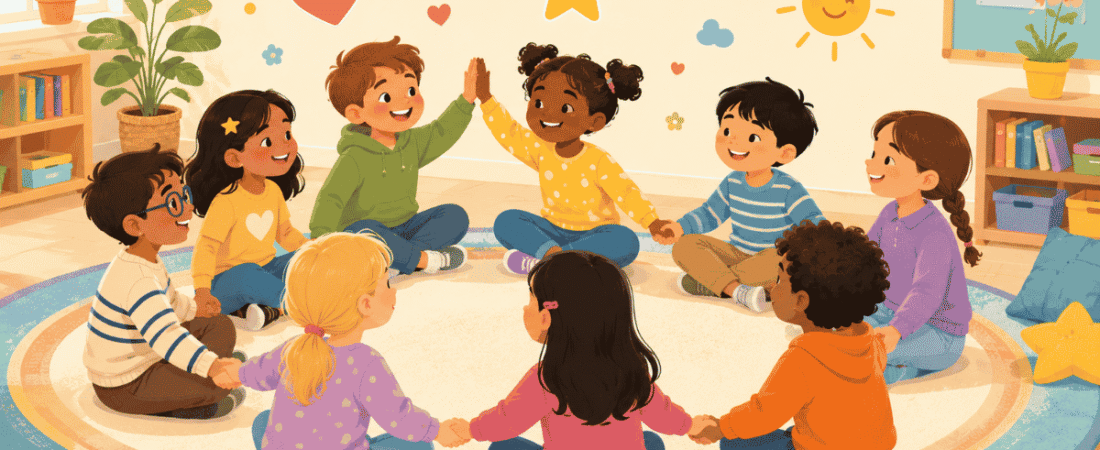
A strong classroom community doesn’t happen by accident it’s built one activity at a time. When elementary students feel safe, connected, and valued by their peers, they participate more, behave better, and enjoy school more. That’s why intentional community building activities for elementary students should be a regular part of any classroom routine, not just a first-week-of-school event.
Below are 30+ tested activities organized by category, so you can pick the right one whether you have 5 minutes or a full class period.
Why Community Building Matters in Elementary Classrooms
- Reduces Behavior Issues: Students who feel connected to their class are less likely to act out.
- Builds Empathy: Working together teaches kids to understand different perspectives.
- Increases Participation: Shy students open up faster in a classroom that feels safe.
- Supports Social-Emotional Learning (SEL): Regular connection activities reinforce the same skills taught in SEL curricula.
- Improves Academic Outcomes: Classrooms with strong community-building practices tend to see measurable gains in engagement and on-task behavior.
Quick Daily Icebreakers (5 Minutes or Less)
- One-Word Check-In — Each student describes their mood in one word.
- Compliment Circle — Pass a ball; whoever catches it gives a genuine compliment to the person who passed it.
- High Five Line-Up — Students line up by birthday month, height, or shoe size without talking, just gestures.
- Thumbs Up/Down/Sideways — A quick visual poll on how everyone’s feeling.
- Weather Report — “If your mood was weather today, what would it be?”
- Gratitude Jar — Students drop a slip of paper naming one thing they’re thankful for; read a few aloud each week.
Team-Building Games (10–20 Minutes)
- Human Knot — Students hold hands in a circle and untangle themselves without letting go.
- Line Up Silently — Arrange the class in order (alphabetically, by age, etc.) without speaking.
- Group Juggle — Pass a ball around a circle in a set pattern, then add more balls to increase difficulty.
- Build a Tower — In small groups, build the tallest tower using only paper and tape in 10 minutes.
- Class Puzzle — Give each student one puzzle piece with their name on it; combine them into a class collage.
- Trust Walk — Partner students up; one is blindfolded and guided safely by the other’s verbal instructions.
- The Great Cup Stack — Teams race to stack and unstack cups using only a rubber band and strings pulled by each member.
Getting-to-Know-You Activities
- All About Me Bag — Students bring 3 small items from home that represent them and share with the class.
- Interview a Classmate — Pair students up to interview each other, then introduce their partner to the class.
- Class Interest Bingo — A bingo card where each square is a fact (“has a pet,” “likes pizza”); students find classmates who match.
- Two Truths and a Lie — Each student shares three statements about themselves; classmates guess the lie.
- Name Chain Game — Each student says their name plus an adjective that starts with the same letter (e.g., “Jumping Jake”), and the class repeats the whole chain.
SEL & Emotional Connection Activities
- Feelings Check-In Chart — Students place a clip or sticker next to the emoji that matches their mood.
- Kindness Bingo — A card of kind acts to complete during the week (hold the door, help a friend, etc.).
- Buddy Bench — A designated spot where a student can sit if they want someone to play with, encouraging peers to invite them in.
- Worry Box — Students can anonymously write down a worry and drop it in a box for the teacher to address privately or as a class.
- Class Agreements Poster — As a group, create and sign a poster of classroom values everyone agrees to follow.
Collaborative Class Projects
- Classroom Quilt — Each student decorates one paper square representing themselves; combine into a “quilt” for the wall.
- Community Mural — A shared art project where every student contributes one section.
- Class Time Capsule — Students write letters to their future selves, opened at the end of the year.
- Book Buddies — Pair younger and older students for shared reading time to build cross-grade community.
- Random Acts of Kindness Challenge — The whole class tracks kind acts on a chart, working toward a shared class goal or reward.
Weekly Circle Time Prompts
- Rose, Bud, Thorn — Share a highlight (rose), something to look forward to (bud), and a challenge (thorn).
- Friendship Friday — End the week by having students name one classmate who helped them and how.
- Class Shoutouts — A few minutes where students can publicly appreciate a peer.
- Mystery Student — Reveal clues about a “mystery classmate” throughout the day; students guess who it is.
Tips for Making These Activities Stick
- Be Consistent: Repeat activities weekly rather than doing them once and stopping.
- Rotate Leadership: Let different students lead circle time or pick the activity.
- Keep It Short: 5–15 minutes is usually enough, don’t let it eat into instructional time.
- Make It Safe: Always allow a “pass” option so no student feels forced to share.
- Track Progress: Notice which activities get the most engagement and repeat those more often.
Frequently Asked Questions
How often should I do community building activities? Ideally daily in some small form (a quick check-in) with a longer activity once or twice a week.
What if some students refuse to participate? Never force participation. Offer non-verbal options (thumbs up/down, written responses) and let trust build over time.
Are these activities only for the beginning of the school year? No, community needs ongoing maintenance. Many teachers find mid-year and post-break check-ins just as important as the first week.
Can these activities help with behavior problems? Yes. Students who feel a sense of belonging are statistically less likely to display disruptive behavior, since much of it stems from seeking attention or connection.
Final Thoughts
Building a strong classroom community takes consistency, not perfection. Start small, pick two or three activities from this list to try this week, and build from there. Over time, these small moments of connection add up to a classroom where every student feels like they belong.